How effective is a diaphragm? Effectiveness and use explained simply

 | 
by Pavitra Purohit, Scientific Product Manager

Brief explanation

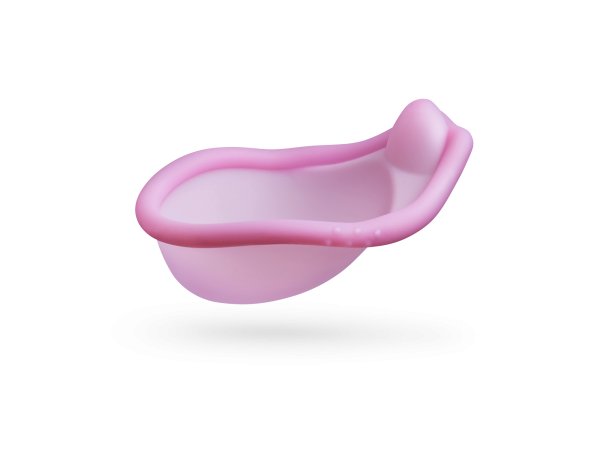
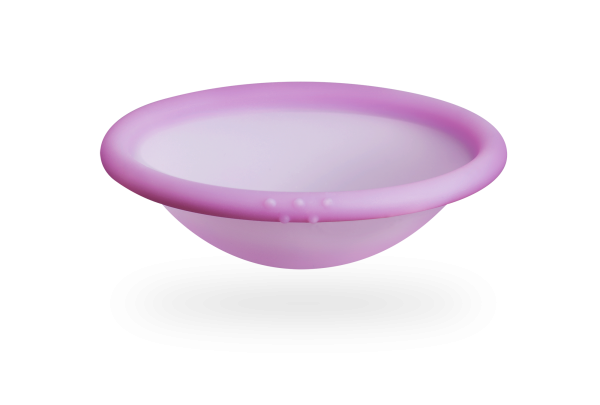
The diaphragm is a hormone-free barrier method of contraception. It is inserted into the vagina before sexual intercourse and covers the cervix, preventing sperm from entering the uterus.
The Caya® diaphragm is a modern one-size-fits-all diaphragm developed in collaboration with users and designed to be used without individual fitting.


________________________________________________________________________________________________________

Why many people ask: How effective is a diaphragm?

Those interested in hormone-free contraception often want to know how reliably a diaphragm can prevent pregnancy.
The effectiveness of contraceptive methods is usually described in studies using so-called pregnancy rates or the Pearl Index. It is important to understand that:
With many methods, effectiveness depends not only on the method itself, but also on how consistently and correctly it is used.

This applies in particular to user-dependent methods such as:

  • Diaphragm
  • Condoms
  • Natural family planning (NFP)
  • The 'pill' 


________________________________________________________________________________________________________

How is the effectiveness of contraceptive methods assessed?

In scientific studies on contraceptives, a distinction is often made between:
typical use 
perfect use

This distinction helps to assess effectiveness as realistically as possible.


________________________________________________________________________________________________________

Typical use

"Typical use" describes use under everyday conditions.
This may include situations where, for example:

  • the diaphragm does not fit properly
  • the gel is forgotten
  • the method is not used during every sexual intercourse
  • errors in use occur

The figures for ‘typical use’ therefore reflect how a method works in real-life situations.
The effectiveness of the diaphragm method therefore depends largely on correct and consistent use by the user or couple. This is comparable to forgetting to take the ‘pill’, which statistically occurs around 2.3 times per month for a woman under ‘typical use’ conditions.


________________________________________________________________________________________________________

Perfect use

"Perfect use" describes the best possible use in everyday life.
With the diaphragm, this means, for example:

  • the diaphragm is inserted correctly before every sexual intercourse
  • the cervix is completely covered
  • a suitable diaphragm gel is used
  • the diaphragm remains in the vagina for at least six hours after sexual intercourse

However, it is important to note:
"Perfect use" does not mean absolute certainty or a flawless laboratory setting. Even when used correctly, no barrier method can completely rule out pregnancy. No contraceptive is 100% effective.


________________________________________________________________________________________________________

How effective is a diaphragm?

The effectiveness of the Caya® diaphragm was investigated in a clinical trial involving 450 couples. The results showed that, with typical use, approximately 10 out of 100 women became pregnant during the 6-month study period. 
When used correctly, this figure stood at around 8 in 100 women.
Conversely, this means: Around 90% of women did not become pregnant within a year when using the method typically. 
Around 92% of women did not become pregnant within a year when using the method perfectly.

The study also showed that:

  • 98% of women were able to use the one-size-fits-all 'Caya' diaphragm,
  • the majority of participants rated the method positively,
  • and its use was predominantly described as simple.


________________________________________________________________________________________________________

Important note on interpretation

The study originally ran for six months. The published annual figures were statistically extrapolated to twelve months*. Such extrapolations are common in contraceptive studies, but should be taken into account when interpreting the results.
The Caya® diaphragm is among the most extensively studied diaphragms available. Funding for a total of six studies came from industry-independent US government funds (USAID).


________________________________________________________________________________________________________

How does the diaphragm compare to other contraceptive methods?

The effectiveness of a diaphragm is comparable to other hormone-free barrier methods. The following table shows typical comparative figures for various methods under typical and perfect use:


Contraceptive method Typical use Perfect use
Diaphragm + gel

approx. 17-18 pregnancies per 100   women per year

approx. 13-14
Condom approx. 13 approx. 2
The pill approx. 7 <1
Copper IUD <1 <1
Hormone implant <1 <1

These figures show:
Barrier methods such as the diaphragm or condom are more dependent on correct use than so-called ‘user-independent methods’ such as IUDs or implants. With the ‘pill’, it is also important that the user remembers to take the tablet every day.


________________________________________________________________________________________________________

Why people still consciously choose a diaphragm

The choice of a contraceptive method does not depend solely on statistical effectiveness. Many people consciously choose a diaphragm because it:

  • is hormone-free
  • is only used when needed
  • has no systemic effect on the body
  • can be used independently 
  • is reusable
  • and remains compatible with the natural cycle

For many users, therefore, the focus is not solely on maximum effectiveness, but on the combination of being hormone-free, flexibility and personal body awareness.


________________________________________________________________________________________________________

Why clinical trial data and post-market experience may differ

The Caya® diaphragm has been available internationally in 30 countries since 2013 and is used worldwide.
Experience gained from post-market use (‘post-market surveillance’) can provide additional insights into everyday use. However, such data cannot be directly compared with clinical trials.

The reason:
In clinical trials, pregnancies are actively and systematically recorded according to fixed criteria. Post-market feedback, on the other hand, is usually based on voluntary reports and does not fully capture all uses or pregnancies.
Post-market data can therefore provide supplementary safety information, but cannot replace controlled clinical efficacy trials. The data collected since the product’s launch is significantly more extensive and provides stronger evidence than the clinical trials. As the manufacturer, we have received reports of only 38 unintended pregnancies in the 13 years since over 500,000 Caya diaphragms were placed on the market. Statistically speaking, this figure should be higher. Furthermore, reports of side effects from users are recorded and evaluated. Since its market launch 13 years ago, no new or previously unknown side effects have been recorded. The Caya diaphragm therefore has an established safety profile and many years of post-market experience. 


________________________________________________________________________________________________________ 

Frequently asked questions about the safety of a diaphragm

Does a diaphragm always have to be used with gel?
Yes. The diaphragm should always be used together with a suitable diaphragm gel. The gel further supports the barrier effect and makes it more difficult for sperm to penetrate.

Does a diaphragm also protect against sexually transmitted infections?
No. A diaphragm does not provide reliable protection against sexually transmitted infections (STIs). Condoms are recommended for protection against STIs.


________________________________________________________________________________________________________ 

Conclusion

The diaphragm is a hormone-free barrier method whose effectiveness – much like that of condoms or ‘the pill’ – depends heavily on correct and consistent use.
The available study data show that the diaphragm is slightly less effective than long-term, user-independent methods such as copper IUDs, hormonal IUDs or implants, but falls within the expected range for hormone-free barrier methods.
For people seeking a hormone-free, on-demand and self-determined method of contraception, the diaphragm may therefore be a suitable option.


Scientific sources

  1. Schwartz JL et al.
    Contraceptive Efficacy, Safety, Fit, and Acceptability of a Single-Size Diaphragm       Developed With End-User Input.
    Obstetrics & Gynecology. 2015;125(4):895–903.
    DOI: 10.1097/AOG.0000000000000721
  2. Trussel J.
    Contraceptive failure in the United States.
    Contraception. 2011;83(5):397–404.
    DOI: 10.1016/j.contraception.2011.01.021
  3. Centers for Disease Control and Prevention (CDC).
    Contraception and Birth Control Methods.
    https://www.cdc.gov/contraception/
  4. Guttmacher Institute.
    Contraceptive Effectiveness in the United States.
    https://www.guttmacher.org/factsheet/contraceptive-effectiveness-united-states

*Contraceptive methods are often compared over a 12-month period. The results of the study were statistically extrapolated to a year. This yields approximately the following figures: around 82% without pregnancy with typical use and around 86% with perfect use per year.

⚠️Disclaimer: This article is for general information purposes only and is not a substitute for individual medical advice.